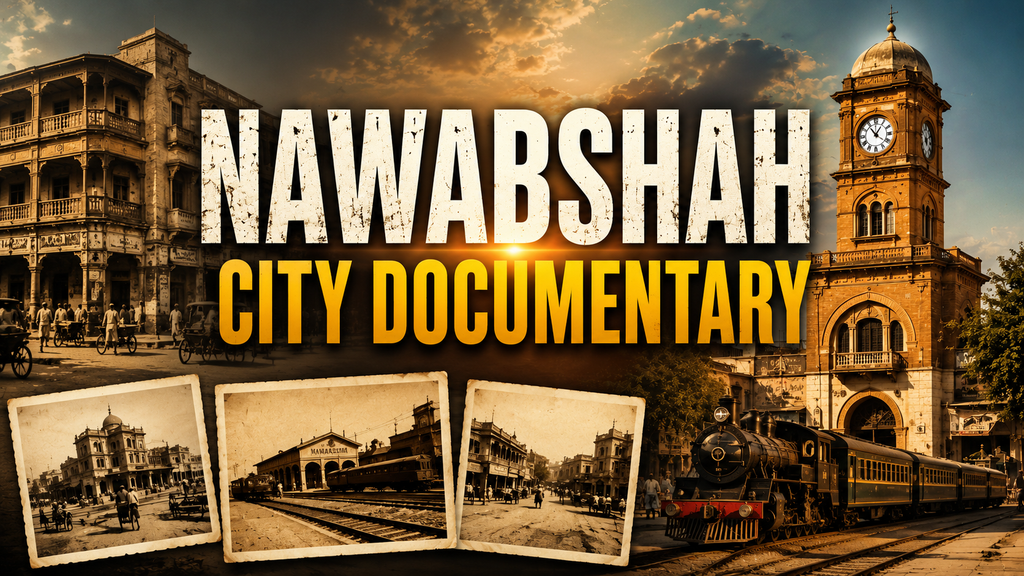
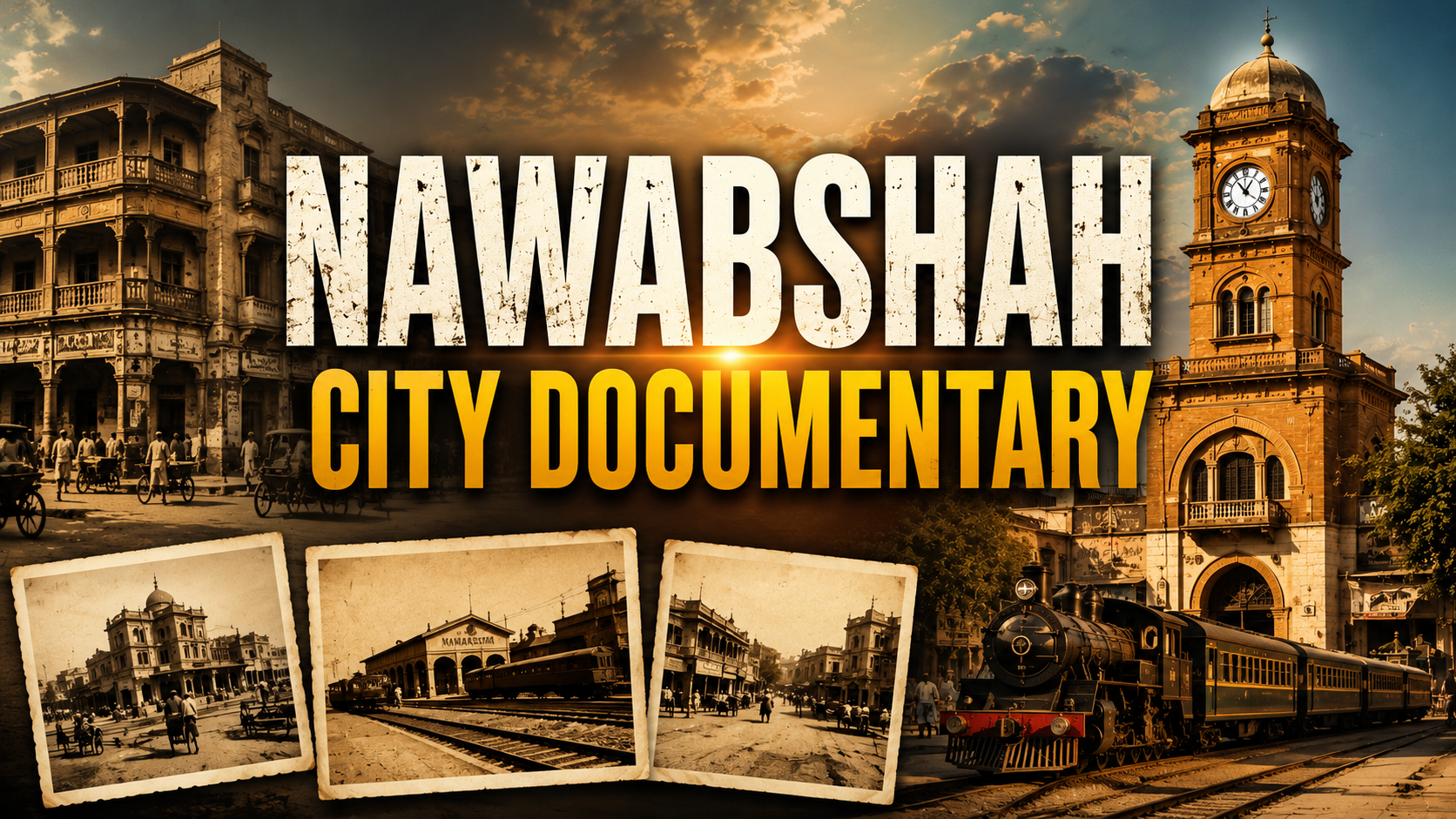
Nawabshah, now officially known as Shaheed Benazirabad, is one of the important cities of Sindh, Pakistan. Beyond its busy roads, markets, schools, offices, and modern neighborhoods lies a fascinating story of an older city—one shaped by changing generations, local traditions, historic streets, and countless memories.
In this documentary-style journey, Online Sindh takes a look at Old Nawabshah, exploring its history, streets, landmarks, culture, and the memories that continue to connect people with the city’s past.
The Story Behind Old Nawabshah
Nawabshah developed as an important settlement in the region during the growth of the modern administrative and railway network in Sindh. Over the decades, the city expanded from a relatively small urban center into a major city of the region.
The old parts of Nawabshah reflect a different era. Traditional buildings, older markets, narrow streets, historic neighborhoods, and long-established businesses tell stories that are often passed from one generation to another.
For older residents, these places are more than buildings and roads—they are reminders of childhood, family, friendships, celebrations, and everyday life.
Exploring the Streets of Old Nawabshah
Walking through the older areas of Nawabshah can feel like stepping into another chapter of the city’s history.
The streets have witnessed generations of residents going about their daily lives. Old shops and markets have served local communities for decades, while residential areas have developed their own identities and traditions.
Some streets that once seemed quiet and familiar are now surrounded by a growing modern city. Yet traces of the old Nawabshah remain visible for those who take the time to look.
Nawabshah’s Historic Markets and Local Life
Markets have always played an important role in the life of Nawabshah. They are places where commerce and community meet.
From traditional shops to small family businesses, the older markets represent an important part of the city’s economic and social history. Many businesses have been associated with particular families for generations, creating a strong connection between local commerce and community life.
The sounds of shopkeepers, customers, motorcycles, rickshaws, and street vendors create an atmosphere that is uniquely connected to everyday life in Sindh.
Forgotten Memories of Nawabshah
Perhaps the most valuable part of Old Nawabshah is not found in official records—it exists in people’s memories.
Older residents often remember streets as they looked decades ago, when traffic was lighter and neighborhoods were smaller. They remember schools, playgrounds, cinemas, shops, tea stalls, community gatherings, and places where friends met every day.
Many of these memories are slowly disappearing as the city changes.
That is why documenting Old Nawabshah is important. Photographs, videos, personal stories, and memories can help preserve a record of the city for future generations.
How Nawabshah Has Changed
Like many cities in Sindh, Nawabshah has experienced significant urban growth. New roads, commercial areas, residential neighborhoods, educational institutions, businesses, and modern facilities have changed the appearance of the city.
Modern Nawabshah is very different from the city remembered by previous generations.
However, development does not completely erase the past. Old neighborhoods and historic locations continue to exist alongside newer parts of the city, creating a unique combination of old and new.
The Cultural Identity of Nawabshah
Nawabshah is also connected to the wider cultural identity of Sindh. Sindhi traditions, language, food, clothing, hospitality, festivals, music, and family values remain important parts of local life.
This mixture of history, culture, and changing generations makes the city an interesting subject for documentary storytelling.
Why We Should Preserve Old Nawabshah
Their identity also comes from the places and stories that came before.
Preserving the history of Old Nawabshah can help younger generations understand how their city developed and how everyday life has changed over time.
Old photographs, personal interviews, historic buildings, local stories, and memories can all contribute to creating a valuable visual archive of Nawabshah.
A Journey Through Time
A documentary about Old Nawabshah is ultimately a journey through time.
It is a journey from quiet streets to busy roads, from traditional markets to modern shopping areas, and from childhood memories to the rapidly changing city of today.
For people who grew up in Nawabshah, these images may bring back memories of another time. For younger viewers, they can provide a glimpse into a city they may know only through its modern appearance.
Online Sindh aims to bring these stories to audiences interested in Sindh’s history, culture, cities, and forgotten memories.
Final Thoughts
Nawabshah is more than a city—it is a collection of memories. Every old street, market, neighborhood, building, and familiar corner has a story to tell.